
How to Shop for Current MYGA Rates
MYGA rates are dynamic. The methodology to compare current rates across carriers, what affects rates, and the questions to ask before locking in.
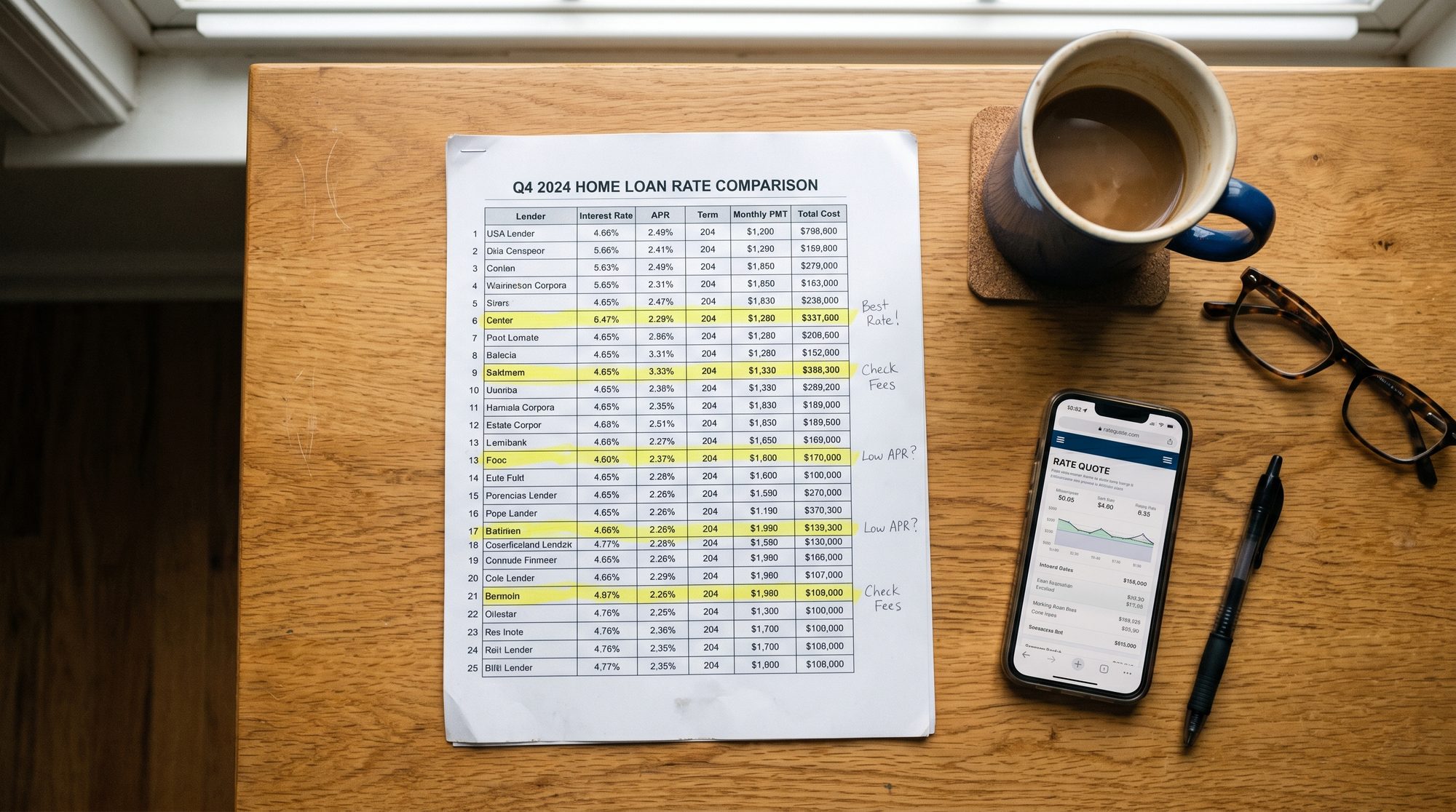
MYGA rates change weekly. A rate quoted today may not be available next month. The “best” MYGA rate is whatever the highest competitive carrier is offering on a given day for the consumer’s chosen term and premium amount.
This article documents the methodology for shopping current MYGA rates without anchoring on stale data.
What drives MYGA rates
Three primary inputs determine carrier rate-setting:
Treasury yields. Carriers invest premium reserves primarily in investment-grade fixed-income securities. The yield on their portfolio funds the rate offered to consumers. When the 5-year Treasury yields 4.5%, MYGAs commonly offer 5.0-5.5%. When the 5-year yields 3%, MYGAs commonly offer 3.5-4.0%.
Carrier portfolio mix. Carriers with higher allocations to investment-grade corporate bonds and structured credit can offer higher rates than carriers concentrated in Treasuries alone. The Athene/Apollo and Global Atlantic/KKR partnerships have made private credit and alternatives available at scale, supporting competitive rates.
Competitive positioning. Newer entrants and carriers seeking premium growth often price higher than established carriers. A top-tier mutual carrier like New York Life or MassMutual rarely offers the highest rate; they compete on financial strength and brand. Mid-tier and growth-oriented carriers compete on rate.
Shopping methodology
A consumer rate-shopping a MYGA should:
1. Define the term
Decide on the term length. MYGAs commonly come in 2, 3, 4, 5, 6, 7, and 10-year terms. Some carriers offer 8 and 9 years.
The term should match the consumer’s actual capital horizon. Locking up money for longer than needed is not the goal; matching the term to the use case is.
2. Request quotes from 5+ carriers
Get quotes from at least 5 carriers covering different tiers:
- 1-2 top-tier carriers (A++ or A+ rated)
- 2-3 mid-tier carriers (A or A-)
- 1-2 newer / growth-oriented carriers (A or B++)
The spread between the lowest and highest competitive rate at the same term is typically 0.5% to 1.5%. The top-tier carriers will be on the low end; the growth-oriented carriers on the high end.
3. Match every variable exactly
For comparable quotes, match:
- Premium amount (some carriers have higher rates above $100K or $250K thresholds)
- Term length
- Tax classification (qualified vs non-qualified)
- Any rider election
- State of issue (state-specific rate variations exist)
4. Check carrier financial strength
Before chasing the highest rate, verify the carrier’s financial strength rating. A.M. Best A or better is the standard benchmark. Lower-rated carriers may offer higher rates because the market prices their credit risk into the spread.
For very large placements ($500,000+), split across multiple highly-rated carriers below each state’s guaranty association coverage limit.
What to verify on the rate card
Every quote should disclose:
- Guaranteed rate for the full term (not a teaser rate for year 1)
- Surrender schedule year by year
- Market value adjustment (MVA) terms
- Free withdrawal allowance (typically 10% annually starting year 2)
- Maturity options (auto-renewal, withdraw, annuitize, 1035 exchange)
- Premium minimum and maximum
If any of these are vague or absent, ask in writing before signing.
Tiered rate structures
Many MYGAs have tiered rates by premium amount:
- $10,000-$99,999: base rate
- $100,000-$249,999: +0.10% to +0.25%
- $250,000-$499,999: +0.25% to +0.50%
- $500,000+: +0.50% or higher
For a consumer with $200,000 to place, a single $200,000 MYGA earns the higher tier rate. Splitting across two $100,000 contracts at different carriers earns the lower tier rate at both. The tier structure favors concentration up to the consumer’s risk tolerance and carrier coverage limit.
Auto-renewal traps
Most MYGAs auto-renew at the carrier’s then-current rate if the consumer doesn’t take action at maturity. The carrier’s renewal rate is often well below new-issue rates from the same carrier.
A 5-year MYGA issued at 5.50% might auto-renew at 4.25% — the carrier’s current new-issue rate would be 5.25%. The consumer who lets the contract auto-renew without comparison-shopping leaves yield on the table.
Action item: set a calendar reminder 60-90 days before MYGA maturity. Shop new rates. Compare to the auto-renewal rate. Move the contract via 1035 exchange if the difference is meaningful.
Tiered renewal structures
Some carriers offer their best rates only on new business, with renewal rates declining over time. Other carriers offer rate-locking features or guaranteed renewal floors.
For a consumer planning long-term annuity holdings, the renewal mechanics matter as much as the issue rate. Verify before locking in.
Where to look for current rates
Carrier rate cards are typically not posted publicly. Current rates are quoted by:
- Independent insurance agents with carrier relationships
- IMO/FMO wholesale platforms (accessed through agents)
- Some retail aggregators (which earn commissions on referrals)
This is one of the few categories of financial product where direct-to-consumer pricing is rare. The producer relationship is part of the distribution model.
When working with a producer:
- Ask which carriers they can write business with
- Ask whether they have access to a rate-comparison platform
- Request rate quotes for 5+ carriers in writing
The producer is compensated by commission from the carrier (typically 1-3% of premium on a MYGA). The commission is funded by the carrier’s margin and does not directly reduce the rate offered to the consumer.
How rate environment affects the decision
In a high-rate environment (5-year Treasury above 4%), MYGAs become competitive with bond ladders and offer locked-in yields. Long-term MYGA decisions in a high-rate environment can capture above-average historical yields.
In a low-rate environment, MYGAs are less compelling. Consumers should consider shorter terms (3-5 years) to preserve flexibility for higher rates in the future.
Treasury yield data is publicly available at FRED (Federal Reserve Economic Data). Comparing the current 5-year Treasury yield to the historical 30-year average (~4-5%) gives a quick sense of whether rates are elevated, average, or low.
For the broader MYGA category, see the MYGA pillar page.
Researching myga annuities? A specialist who has already screened these carriers and contracts can walk through the trade-offs with you.
AnnuityMatchPro is not a carrier, an advisor, or an agency. We connect retirees to a licensed specialist for a free, no-obligation conversation. Cancel anytime, no follow-up if you don't want it.